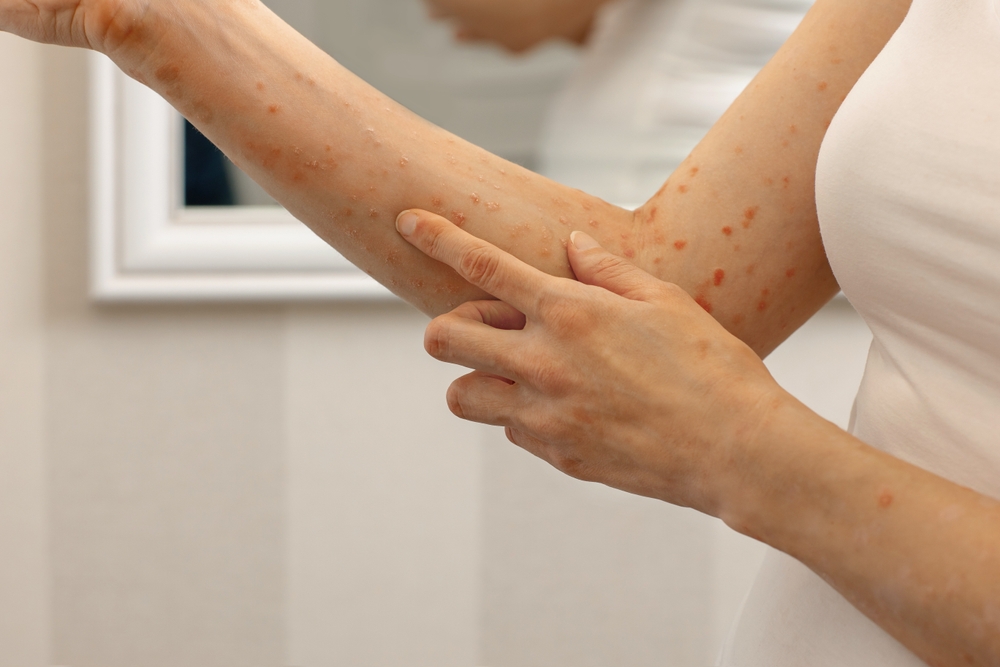
Novomed offers skin infection treatment in Abu Dhabi, providing personalized dermatological care for bacterial, viral, fungal, and parasitic skin conditions. Our dermatology team assesses the infection and recommends suitable treatment based on its type, location, and severity.
Causes of Skin Infections
Skin infections occur when microorganisms enter or affect the skin. The cause depends on the type of infection:
| Type | Common Causes |
|---|---|
| Bacterial | Bacteria entering through cuts, wounds, insect bites, or damaged skin; sometimes spread through close contact. |
| Viral | Viruses transmitted through direct contact, respiratory droplets, or contact with infected skin or surfaces. |
| Fungal | Fungi thriving in warm, moist areas; spread through skin contact or contaminated towels, footwear, and surfaces. |
| Parasitic | Parasites such as mites or lice spreading through close contact or, in some cases, contaminated clothing or bedding. |
Risk factors may include breaks in the skin, excessive sweating, poor wound care, close contact with an infected person, shared personal items, and a weakened immune system.
The cause can’t always be identified by appearance alone. A dermatologist can examine the affected area and recommend testing or treatment when needed.
Common Skin Infections
Common skin infections include:
- Impetigo: A contagious bacterial infection that causes sores and honey-colored crusts.
- Cellulitis: A bacterial infection affecting deeper layers of the skin, often causing redness, warmth, swelling, and pain.
- Folliculitis: Inflammation or infection of hair follicles, causing small red bumps or pustules.
- Warts: Viral skin growths caused by human papillomavirus (HPV).
- Herpes simplex: A viral infection that can cause recurrent blisters or sores.
- Ringworm: A fungal infection that may cause circular, itchy, scaly patches.
- Athlete’s foot: A fungal infection commonly affecting the skin between the toes.
- Scabies: A parasitic infestation caused by mites, often associated with intense itching.
A dermatologist can assess the symptoms and determine the appropriate treatment.
Skin Infection Treatment Options
Treatment depends on the type of infection, its location, and severity. Options may include:
| Infection Type | Treatment Options |
|---|---|
| Bacterial | Topical or oral antibiotics, depending on the infection. Some abscesses may require drainage by a healthcare professional. |
| Viral | Antiviral medication for certain infections, along with symptom-relief measures. |
| Fungal | Topical or oral antifungal medications, depending on the affected area and severity. |
| Parasitic | Prescribed antiparasitic treatments, such as creams, lotions, or oral medication, depending on the parasite. |
A dermatologist may recommend diagnostic tests to confirm the cause and select appropriate treatment. Avoid using leftover antibiotics or steroid creams without medical advice, as they may worsen or mask some infections.
Skin Infection Treatment Process
1. Dermatology Consultation
The dermatologist reviews your symptoms, medical history, possible exposure, and previous treatments.
2. Skin Examination and Diagnosis
The affected area is examined to assess the infection. A skin swab, scraping, or other test may be recommended when needed.
3. Personalized Treatment Plan
Treatment is selected according to the infection type, location, and severity. Options may include antibacterial, antiviral, antifungal, or antiparasitic medication.
4. Treatment and Care Instructions
Begin the prescribed treatment and follow instructions for medication use, skin care, and hygiene.
5. Follow-Up Assessment
The dermatologist reviews your response to treatment and determines whether further care or testing is required.
6. Prevention Guidance
You may receive advice on wound care, hygiene, avoiding transmission, and reducing the risk of recurrence.
Treatment duration and follow-up vary depending on the infection and individual response.
Why Choose Novomed for Skin Infection Treatments?
- Dermatology assessment: Evaluation of symptoms, affected areas, and possible causes of infection.
- Personalized treatment plans: Recommendations based on the infection type, location, and severity.
- Appropriate treatment options: Care may include prescribed antibacterial, antiviral, antifungal, or antiparasitic medications.
- Diagnostic support: Additional tests may be recommended when needed to help confirm the diagnosis.
- Follow-up care: Monitoring treatment response and reviewing symptoms during recovery.
- Prevention guidance: Advice on skin care, hygiene, and reducing the risk of recurrence or transmission.
Book a Dermatology Consultation at Novomed
Book a dermatology consultation at Novomed to discuss your skin concerns and receive an assessment and treatment recommendations tailored to your needs. Dermatology Treatments are available in Abu Dhabi and Al Ain.
Phone: 800 6686
| Branch | Address |
|---|---|
| Novomed MBZ City | 637 Al Anwar Street, Mohammed Bin Zayed City, Zone 19 (Z19), Abu Dhabi |
| Novomed Al Bateen | 312 King Abdullah Bin Abdulaziz Al Saud Street, Al Bateen, Abu Dhabi |
| Novomed Al Ain | Building 47, Towayya Al Ragayeb, Mohammed Ibn Zayed Al Awwal Street, Al Ain |