Novomed Riyadh provides skin cancer screening through its dermatology services, with comprehensive skin examinations to identify suspicious moles, birthmarks, and other unusual skin lesions. Its Riyadh dermatology clinic offers comprehensive skin assessments and personalized care.
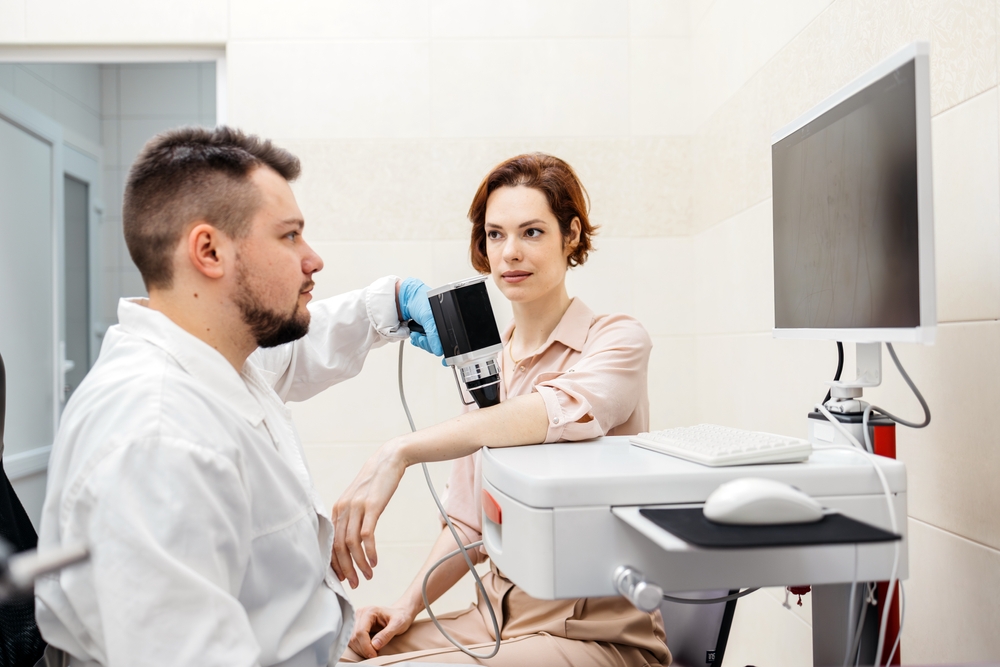
Skin cancer screening is a visual examination of the skin by a dermatologist to look for signs that may indicate skin cancer. The examination typically includes checking moles, birthmarks, and other spots for changes in their shape, color, size, border, or texture. A dermatoscope may be used for a closer examination of suspicious lesions.
Screening is particularly important for people with risk factors such as a personal or family history of skin cancer, numerous moles, frequent sunburns, or significant sun exposure. If a suspicious lesion is identified, the dermatologist may recommend a skin biopsy for laboratory examination and definitive diagnosis.
Who Needs Skin Cancer Screening?
Skin cancer screening may be recommended for people who have a higher risk of developing skin cancer, including:
- People with a personal or family history of skin cancer.
- Those with many moles or atypical-looking moles.
- People who have had frequent or intense sun exposure or sunburns.
- Individuals who spend significant time outdoors or have a history of tanning.
- People with fair skin, light eyes, or light hair, particularly when combined with significant UV exposure.
- Those with a weakened immune system or certain medical conditions that increase skin cancer risk.
- Anyone who notices a new, changing, bleeding, itching, or unusual skin lesion.
Even without known risk factors, you should see a dermatologist if you notice a suspicious change in a mole or skin lesion. A professional examination can help determine whether further evaluation, such as dermoscopy or biopsy, is needed.
Skin Cancer Screening Procedure
The skin cancer screening procedure usually involves a careful examination of the skin by a dermatologist to identify suspicious moles, spots, or lesions. A typical screening may include:
- Medical history: The dermatologist asks about previous skin cancer, family history, sun exposure, medications, and any changes you have noticed on your skin.
- Full-body skin examination: The dermatologist examines the skin, including moles, birthmarks, and other lesions, looking for unusual or changing areas.
- Dermoscopy: A dermatoscope may be used to examine suspicious spots in greater detail and identify features that may not be visible to the naked eye.
- Assessment of suspicious lesions: If a lesion appears concerning, the dermatologist may recommend further evaluation or monitoring.
- Skin biopsy when needed: If skin cancer is suspected, a small sample or the entire lesion may be removed under local anesthesia and sent to a laboratory for microscopic examination. A biopsy is the definitive way to confirm skin cancer.
- Follow-up: Depending on the findings, your dermatologist may recommend routine monitoring, another examination, or further treatment.
Important: A skin cancer screening is usually a visual examination and does not normally require blood tests.
Benefits of Skin Cancer Screening
Regular skin cancer screening can provide several important benefits:
- Early detection: Helps identify suspicious lesions before they become more advanced.
- Identifies suspicious moles and spots: A dermatologist can assess changes in size, shape, color, or texture.
- Professional dermoscopic assessment: Dermoscopy can provide a closer view of lesions that may not be clearly visible to the naked eye.
- Supports timely treatment: Detecting skin cancer early can allow appropriate treatment to begin sooner.
- Monitoring high-risk skin: People with numerous or atypical moles can benefit from regular professional monitoring.
- Peace of mind: A professional examination can help clarify whether a new or changing skin lesion requires further investigation.
- Personalized follow-up: Your dermatologist can recommend monitoring or additional testing, such as a biopsy, when necessary.
Cost of Skin Cancer Screening in Riyadh
The cost of skin cancer screening in Riyadh varies depending on whether you need a basic dermatologist examination, dermoscopy/mole assessment, full-body screening, or additional procedures such as a biopsy.
As a general guide, dermoscopy and mole evaluation in Riyadh may range from around SAR 299 to SAR 1,499, depending on the clinic, dermatologist, number of lesions, and extent of the examination.
For Novomed Riyadh, the exact cost should be confirmed when booking because the price can depend on the type of skin examination and whether further assessment or a biopsy is required.
Important: A skin cancer screening is different from skin cancer treatment. Treatment costs can be substantially higher and depend on the type and stage of cancer.
Why Choose Novomed Riyadh for Skin Cancer Screening?
Novomed Riyadh provides dermatology-led skin examinations with a focus on early identification of suspicious moles, spots, and skin lesions. Its dermatology team combines specialist expertise, modern diagnostic technology, and personalized treatment planning.
- Experienced dermatology team: Novomed states that its Riyadh dermatologists have advanced training and extensive experience in medical and cosmetic dermatology.
- Comprehensive skin examination: Screening can include examination of the full body, including areas such as the scalp, hands, feet, and between the toes.
- Detailed lesion assessment: A magnifying device/dermatoscope can be used to examine suspicious moles and marks more closely.
- Personalized care: If a suspicious lesion is identified, the dermatologist can recommend appropriate follow-up, monitoring, or biopsy when necessary.
- Modern clinical facilities: Novomed Riyadh highlights its use of modern medical technology and equipment within a Ministry of Health-approved clinical environment.
- Continuity of care: Patients can receive assessment, follow-up, and further dermatological care within the same medical network when required.
Book your skin cancer screening consultation at Novomed Riyadh for a professional assessment of suspicious or changing moles and skin lesions.