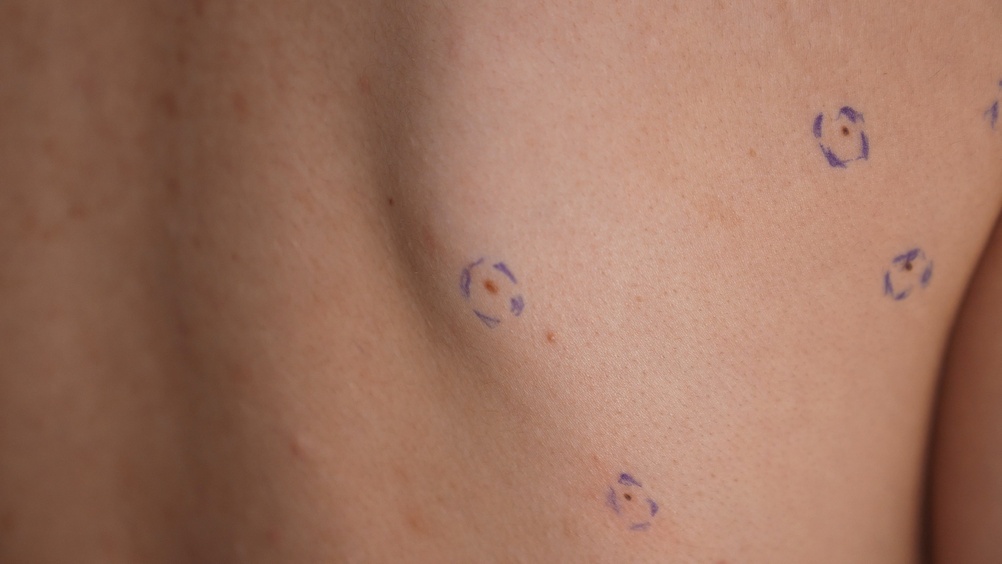
Novomed Riyadh offers advanced Mole Mapping performed by experienced dermatologists using high-resolution digital imaging to monitor moles and pigmented skin lesions over time. This non-invasive skin assessment helps detect changes early and supports the timely diagnosis and management of suspicious lesions.
Mole Mapping is a non-invasive dermatology procedure that uses high-resolution digital photography and dermoscopy to document and monitor moles, birthmarks, and other pigmented skin lesions. By creating a detailed visual record of your skin, dermatologists can compare images over time to identify new moles or detect subtle changes in existing ones that may indicate skin cancer, including melanoma.
Mole mapping is particularly beneficial for individuals with numerous moles, atypical (dysplastic) moles, a personal or family history of skin cancer, or those at increased risk due to fair skin or significant sun exposure. It allows for early detection of suspicious changes while helping avoid unnecessary biopsies of stable, harmless moles.
Who Needs Mole Mapping?
Mole mapping is recommended for individuals who have an increased risk of developing skin cancer or who require regular monitoring of their moles and pigmented skin lesions. It helps dermatologists detect new or changing moles early, when treatment is often most effective.
You may benefit from mole mapping if you:
- Have many moles (typically more than 50).
- Have atypical (dysplastic) moles or unusual-looking moles.
- Have a personal history of melanoma or other skin cancers.
- Have a family history of melanoma or skin cancer.
- Notice a mole that has changed in size, shape, color, or texture, or has started bleeding or itching.
- Have fair skin, light-colored eyes, or red or blonde hair, which may increase the risk of skin cancer.
- Have experienced frequent or severe sunburns, especially during childhood.
- Have significant sun exposure due to outdoor work or recreational activities.
- Have a weakened immune system, which may increase the risk of skin cancer.
- Want routine skin surveillance for peace of mind or early detection of suspicious skin changes.
Regular mole mapping is particularly valuable for high-risk individuals because it allows dermatologists to compare images over time, making it easier to identify subtle changes that may require further evaluation or treatment. Early detection of melanoma and other skin cancers can significantly improve treatment outcomes.
Why Is Mole Mapping Important?
Mole mapping is an important tool for the early detection of skin cancer, particularly melanoma, the most serious type of skin cancer. By creating a detailed digital record of your moles and pigmented skin lesions, dermatologists can monitor even subtle changes over time that may not be noticeable during routine self-examinations.
Benefits of Mole Mapping
- Detects skin cancer early, when treatment is often more successful.
- Monitors changes in existing moles by comparing high-resolution images over time.
- Identifies new or suspicious moles that may require further evaluation.
- Improves the accuracy of skin examinations using digital dermoscopy and photographic documentation.
- Reduces unnecessary biopsies by distinguishing stable, harmless moles from lesions that need closer investigation.
- Provides long-term monitoring for people with multiple or atypical moles.
- Supports personalized skin cancer surveillance, especially for high-risk individuals.
- Offers peace of mind through regular professional skin assessments.
Mole mapping is particularly valuable for people with a personal or family history of skin cancer, numerous or atypical moles, or significant sun exposure. When combined with regular dermatology check-ups, it can help detect suspicious changes at an early stage, allowing prompt diagnosis and treatment if needed.
Cost of Mole Mapping in Riyadh
The cost of Mole Mapping in Riyadh typically ranges from SAR 300 to SAR 1,500 per session. The final price depends on the type of examination (dermoscopy only or full-body digital mole mapping), the number of moles being assessed, and whether follow-up imaging is included.
Factors That Affect the Cost
- Type of mole mapping (single lesion or full-body digital mapping)
- Number of moles or pigmented lesions being examined
- Use of digital dermoscopy and high-resolution imaging
- Dermatologist’s expertise
- Whether follow-up monitoring or repeat imaging is required
Why Choose Novomed for Mole Mapping
At Novomed Riyadh, Mole Mapping is performed by experienced dermatologists using advanced digital imaging and dermoscopy to accurately monitor moles and pigmented skin lesions over time. Our goal is the early detection of suspicious skin changes while providing personalized, evidence-based skin cancer surveillance.
Why Patients Choose Novomed
- Experienced dermatology specialists
Our dermatologists perform comprehensive skin examinations and assess moles for any suspicious features using internationally accepted dermatological practices. - Advanced digital mole mapping technology
We use high-resolution photography and dermoscopy to create a detailed record of your skin, allowing accurate comparison of moles during future visits. - Early detection and ongoing monitoring
Regular mole mapping helps identify new or changing moles at an early stage, when further evaluation or treatment may be most effective. - Personalized risk assessment
Every patient receives an individualized surveillance plan based on factors such as the number of moles, skin type, sun exposure, and personal or family history of skin cancer. - Comprehensive skin cancer screening
Mole mapping can be combined with a full-body skin examination to evaluate suspicious lesions and determine whether additional testing or a biopsy is needed. - Modern facilities and patient-focused care
Novomed combines advanced diagnostic technology with internationally recognized medical standards in a comfortable clinical environment. - Continuous follow-up
Your digital mole images are used for future comparisons, helping detect subtle skin changes that may not be visible during routine self-examinations.
Book Your Mole Mapping Consultation
If you have multiple moles, atypical moles, or a personal or family history of skin cancer, book your Mole Mapping consultation at Novomed Riyadh for expert skin surveillance and early detection of suspicious skin changes.