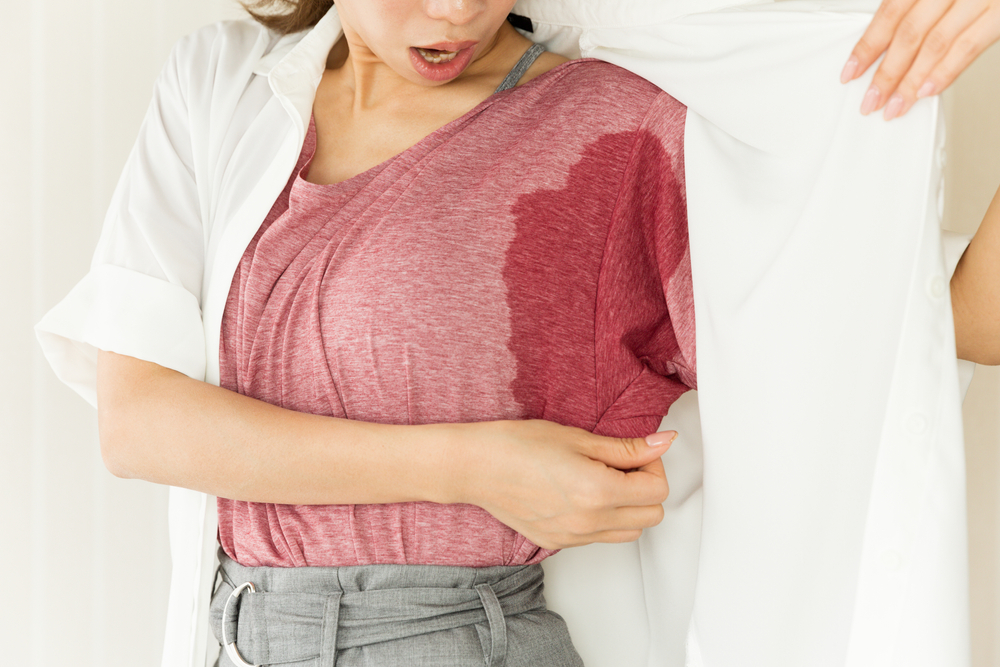
Novomed offers hyperhidrosis treatment in Abu Dhabi, providing personalized medical care for excessive sweating that may affect daily activities and comfort. Our dermatology team assesses the severity and affected areas to recommend suitable treatment options. Treatment may include prescription antiperspirants, medications, or botulinum toxin injections, depending on individual needs. Book a consultation to discuss your concerns and receive a personalized treatment plan.
What Is Hyperhidrosis?
Hyperhidrosis is a medical condition characterized by excessive sweating beyond what is needed to regulate body temperature. It commonly affects the underarms, palms, soles of the feet, and face, and may occur even without heat or physical activity.
Hyperhidrosis can be primary, with no identifiable underlying cause, or secondary to certain medical conditions or medications. Treatment aims to help manage sweating and improve daily comfort.
Causes of Hyperhidrosis
Hyperhidrosis occurs when sweat glands produce more sweat than needed to regulate body temperature. It may be classified into two types:
- Primary Hyperhidrosis: Often begins during childhood or adolescence and is associated with overactivity of the nerves that stimulate sweat glands. It may run in families and commonly affects the underarms, palms, soles, and face.
- Secondary Hyperhidrosis: Excessive sweating caused by an underlying medical condition or medication, such as thyroid disorders, diabetes, hormonal changes, infections, or certain medications.
Diagnosis of Hyperhidrosis
Hyperhidrosis is diagnosed through a medical assessment to determine the sweating pattern, severity, and possible underlying causes.
| Diagnostic Method | Description |
|---|---|
| Medical History | Review of symptoms, sweating patterns, family history, medications, and impact on daily activities. |
| Physical Examination | Assessment of affected areas and distribution of excessive sweating. |
| Starch-Iodine Test | Identifies areas of excessive sweating by showing where sweat is produced. |
| Gravimetric Testing | Measures the amount of sweat produced over a specific period. |
| Laboratory Tests | Blood or other tests may be recommended when an underlying medical condition is suspected. |
A dermatologist can determine the type of hyperhidrosis and recommend appropriate treatment based on the findings.
Hyperhidrosis Treatment Options
Hyperhidrosis treatment aims to reduce excessive sweating and improve daily comfort. The recommended approach depends on the affected areas, severity, and underlying cause.
| Treatment Option | Description |
|---|---|
| Prescription Antiperspirants | Aluminum chloride-based products help reduce sweat production, particularly in the underarms, palms, and soles. |
| Botulinum Toxin Injections | Temporarily block the nerve signals that stimulate sweat glands in areas such as the underarms, palms, and soles. |
| Oral Medications | Anticholinergic medications may help reduce sweating in multiple areas when prescribed by a doctor. |
| Iontophoresis | Uses a mild electrical current through water to help manage excessive sweating of the hands and feet. |
| Energy-Based Treatments | Certain devices may target underarm sweat glands to reduce sweating, depending on clinical suitability. |
| Surgical Treatment | Procedures such as sweat gland removal or sympathectomy may be considered for selected severe cases when other treatments are ineffective. |
Important: Treatment results and duration vary. A dermatologist can assess the condition and recommend suitable options based on individual needs and medical history.
Hyperhidrosis Treatment Steps
Hyperhidrosis treatment at Novomed begins with a medical assessment to identify the cause, severity, and affected areas of excessive sweating. The treatment plan is tailored to each patient’s needs.
| Step | Procedure | Estimated Time |
|---|---|---|
| 1. Medical Consultation | Review of medical history, sweating patterns, symptoms, and impact on daily activities. | 15–30 minutes |
| 2. Diagnosis and Assessment | Examination of affected areas and sweating tests, if needed, to assess severity and identify possible underlying causes. | 10–20 minutes |
| 3. Personalized Treatment Plan | Selection of suitable options, such as prescription antiperspirants, oral medications, or botulinum toxin injections. | 10–15 minutes |
| 4. Treatment Procedure | Administration or prescription of the selected treatment based on the affected area and individual needs. | 20–60 minutes |
| 5. Follow-Up Assessment | Evaluation of treatment response and determination of whether further sessions or adjustments are needed. | 15–20 minutes |
| 6. Ongoing Management | Guidance on maintaining results and managing excessive sweating over time. | As recommended |
Estimated times vary depending on the treatment method, affected area, and individual medical needs.
Expected Results of Hyperhidrosis Treatment
Hyperhidrosis treatment aims to reduce excessive sweating, improve daily comfort, and help manage symptoms in affected areas. Results vary depending on the treatment method, severity of sweating, and individual response.
- Reduced Sweating: Decreased sweat production in treated areas.
- Improved Daily Comfort: Less disruption to everyday activities, work, and social interactions.
- Gradual Improvement: Some treatments provide results within days, while others require several sessions.
- Ongoing Management: Regular treatment or maintenance may be needed to control symptoms over time.
How Long Do Hyperhidrosis Treatment Results Last?
| Treatment | Expected Duration |
|---|---|
| Prescription Antiperspirants | Maintained with regular use |
| Botulinum Toxin Injections | Typically 4–6 months |
| Oral Medications | While taking the medication |
| Iontophoresis | Requires regular maintenance sessions |
| Energy-Based Treatments | May provide long-lasting reduction, depending on the device |
| Surgical Treatment | May provide permanent reduction in treated areas, but risks and outcomes vary |
Important: Hyperhidrosis treatment does not always provide a permanent cure. A dermatologist can recommend a suitable treatment and maintenance plan based on individual needs.
Cost of Hyperhidrosis Treatment in Abu Dhabi
The cost of hyperhidrosis treatment in Abu Dhabi depends on the affected area, severity of excessive sweating, and the treatment method recommended by the dermatologist.
Treatment may involve prescription antiperspirants, oral medications, botulinum toxin injections, or other procedures, depending on individual needs.
| Treatment | Estimated Cost (AED) |
|---|---|
| Dermatology consultation | 300–400 |
| Prescription antiperspirants | 50–300 |
| Underarm Botox for hyperhidrosis | 2,200–3,500 per session |
| Botox for excessive sweating of hands | 1,950–3,000 per session |
| Botox for excessive sweating of feet | 1,950–3,000 per session |
| Oral medications | Varies by prescription |
A dermatology consultation is recommended to determine the most suitable treatment and provide an accurate cost estimate.
Book an appointment: 800 6686 · Novomed
Novomed MBZ City
637 Al Anwar Street, Mohammed Bin Zayed City, Zone 19 (Z19), Abu Dhabi, UAE.
Novomed Al Bateen
312 King Abdullah Bin Abdulaziz Al Saud Street, Al Bateen, Abu Dhabi, UAE.
Novomed Al Ain
Building 47, Towayya Al Ragayeb, Mohammed Ibn Zayed Al Awwal Street, Al Ain, Abu Dhabi, UAE.