Doctor's Bio

Doctor's Bio

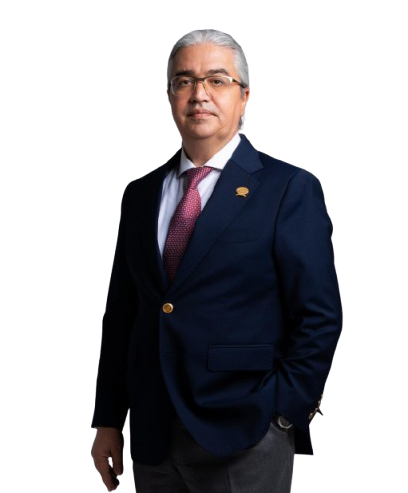
Dr. Cagatay Sezgin is a Turkish Board-Certified General Surgeon and internationally recognised hair transplant surgeon with more than 25 years in hair restoration surgery. Since relocating permanently to Dubai in 2016, he has practised exclusively as a full-time hair transplant surgeon.

In 2001 he became the first Turkish Board-Certified Surgeon accepted into the International Society of Hair Restoration Surgery (ISHRS), and in 2022 he was awarded Fellow status (FISHRS) in recognition of his contributions to the specialty. He has served on the ISHRS FUE Advancement Committee and the ISHRS Membership Committee, helping shape international standards in hair restoration.

Dr. Sezgin is an ISHRS faculty member and surgical trainer as well as a practising surgeon. He has taught on the ISHRS Basic Course in Bangkok and Lisbon, and served as organiser, operating faculty and co-moderator of the ISHRS World Live Surgery Workshop held in Dubai in 2018. He trains both physicians and surgical assistants, with a particular teaching focus on graft handling, donor management, female hair loss and local anaesthesia.

He is a published author in Hair Transplant Forum International, the peer-reviewed journal of the ISHRS, with work spanning graft biology, donor-site complications and surgical technique. In 2019 he published the first documented case of simultaneous hair, eyebrow and beard transplantation performed in a single surgical session — a technique he introduced and named the Head-Trick Operation.

His clinical practice covers the full range of hair restoration: FUE and FUT transplantation, female hairline lowering, corrective surgery for previous transplants, facial hair restoration of the beard, moustache and eyebrows, and advanced work including body-to-scalp grafting and transplantation into scar and burn tissue. He also offers regenerative hair therapies alongside surgery, and places particular emphasis on hair loss diagnosis and long-term follow-up rather than treating transplantation as a single event.
Hair Restoration Surgery

  • FUE Hair Transplantation
  • FUT Hair Transplantation
  • High-Density Hairline Design
  • Female Hairline Lowering
  • Corrective Hair Transplant Surgery
  • Hair Loss Diagnosis and Long-Term Follow-Up

Facial Hair Restoration

Advanced Hair Restoration

  • Body-to-Scalp Hair Transplantation
  • Chest-to-Scalp Hair Transplantation
  • Beard-to-Scalp Hair Transplantation
  • Hair Transplantation in Scar Tissue
  • Burn Scar Hair Restoration
  • Alopecia Areata Hair Restoration

Regenerative Hair Therapies

2016 – Present

Dubai – UAE Full-Time Hair Transplant Surgeon 

practising exclusively in hair restoration surgery

2000 – 2016

Turkey General Surgeon and Hair Transplant Surgeon

Turkish Board Certification in General Surgery

Advanced Courses

  • Hairline Design Workshop — Boston, USA (2010)
  • Eyebrow Transplant Course — Nassau, Bahamas (2012)
  • Body Hair Transplant Course — San Francisco, USA (2013)

International Workshops

  • Hair Loss and Hair Transplantation in Women Workshop — Houston, USA (2013)
  • Robotic Hair Transplantation and Hairline Design Workshop — Manchester, UK (2013)
  • Autologous Stem Cell Therapies in Hair Loss Workshop — Bangkok, Thailand (2015)
  • ISHRS World Live Surgery Workshop — Dubai (2018) — Organiser and Operating Faculty
  • ISHRS and Italian Society of Hair Transplant Surgeons Workshop (2022) — Faculty Lecturer

Professional Affiliations

  • International Society of Hair Restoration Surgery (ISHRS) — Member since 2001; Fellow (FISHRS) since 2022
  • Former Member, ISHRS FUE Advancement Committee (FUEAC)
  • Former Member, ISHRS Membership Committee

Teaching, Faculty and Leadership

ISHRS Faculty Appointments

  • Faculty and Lecturer — ISHRS Basic Course, Bangkok, Thailand (2019)
  • Faculty Member — ISHRS Basic Course, Lisbon, Portugal (2021)
  • Organiser, Operating Faculty and Co-Moderator — ISHRS World Live Surgery Workshop, Dubai (2018)

Surgical Training and Instruction

  • International lecturer in advanced FUE techniques
  • Trainer of physicians and surgical assistants
  • Instructor in graft handling, donor management, female hair loss and local anaesthesia
1. What is the difference between FUE and FUT hair transplantation, and which is better? FUE extracts individual follicular units directly from the donor area, leaving small dot scars and allowing shorter hair afterwards. FUT removes a strip of scalp and leaves a single linear scar, but can yield a high graft count in one session. Neither is universally better — the right choice depends on donor density, scalp laxity, how much coverage is needed and how you wear your hair. 2. How many grafts will I need for a receding hairline? It depends on the area to be covered, your existing density and donor supply, not on a standard figure. A receding frontal hairline typically needs fewer grafts than restoring the crown and mid-scalp together. Graft numbers are calculated after examining the donor area under magnification, and any quote given without that examination is guesswork. 3. Can women have hair transplants, and is the procedure different? Yes. Female pattern hair loss is diffuse rather than following the male pattern, so assessment and planning differ significantly, and not every woman is a surgical candidate. Female hairline lowering is a separate procedure that shortens a high forehead. Diagnosis matters more in women, because hair loss can have hormonal, nutritional or autoimmune causes that need treating first. 4. Can a previous hair transplant be corrected? Yes. Corrective hair transplant surgery addresses unnatural hairline design, visible or pluggy grafts, poor density and depleted donor areas from earlier procedures. Revision work is more complex than a first transplant because donor supply is already reduced and scar tissue affects graft survival, so assessment focuses on what can realistically be improved. 5. What non-surgical options exist before considering a transplant? Regenerative therapies including PRP, exosome therapy, growth factor treatment and laser regrowth can slow loss and improve the quality of existing hair. They do not regrow hair in areas that are already bald. The right starting point is a diagnosis, because medical treatment is often the correct first step and some patients do not need surgery at all. 6. How long is recovery, and when will I see results? Most patients return to normal activity within a week and the transplanted hair sheds in the first month, which is expected. New growth generally begins at three to four months, with meaningful density at six to nine months and the final result at twelve to eighteen months. Hair restoration is a slow process by nature. 7. Can hair be transplanted into scar tissue or burn scars? Yes, though scarred skin has a reduced blood supply, so graft survival is lower than in healthy scalp and results usually require staged sessions. Careful assessment of the scar’s thickness and vascularity comes first. This applies to surgical scars, burn scars and scarring from previous transplants. 8. Is beard, moustache or eyebrow transplantation permanent? Yes — the grafts are taken from the scalp donor area and, once established, grow permanently. Because scalp hair retains its original growth characteristics, transplanted beard and eyebrow hair continues to grow and needs regular trimming. Eyebrow work is particularly technical, since each graft must be angled to lie flat.

Dr. Cagatay Sezgin

General Surgeon & internationally recognised hair transplant surgeon

Dr. Cagatay Sezgin

General Surgeon & internationally recognised hair transplant surgeon

25

EN, TR