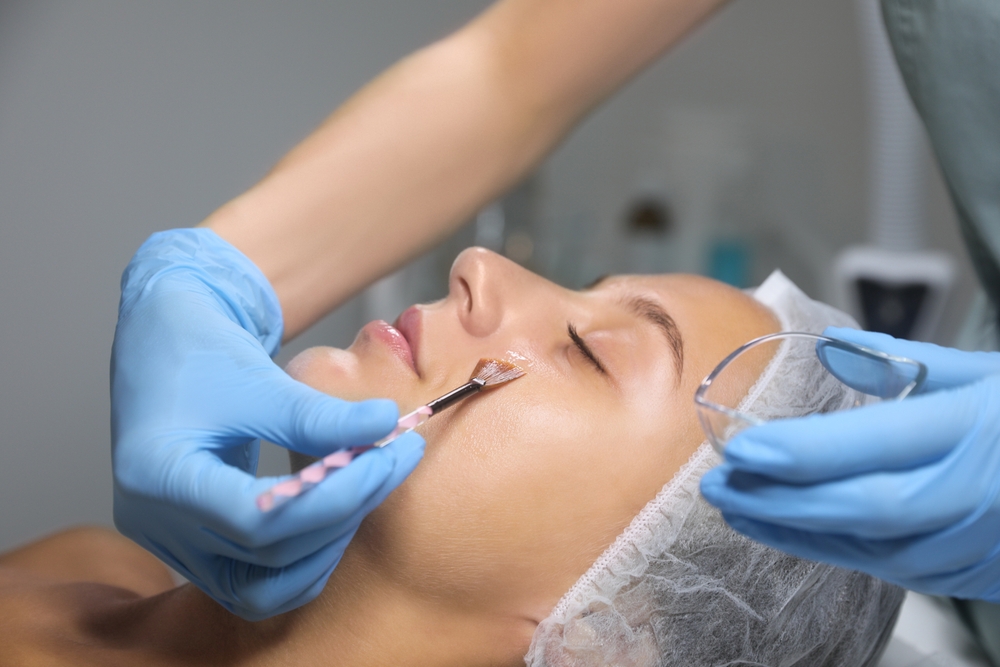
Novomed in Abu Dhabi offers Chemical peel, it is a cosmetic treatment that involves the application of a chemical solution to the skin to exfoliate the top layers, revealing smoother, younger-looking skin. Chemical peels can be performed on the face, neck, and hands and can help treat a range of skin conditions, such as acne, sun damage, wrinkles, and hyperpigmentation.
There are three types of chemical peels: superficial, medium-depth, and deep. Superficial peels are the mildest and can be done without anesthesia. They use a mild acid, such as glycolic acid, to remove the outer layer of skin. Medium-depth peels use a stronger acid, such as trichloroacetic acid (TCA), to penetrate deeper into the skin. Deep peels use a very strong acid, such as phenol, to remove several layers of skin and can only be performed by a dermatologist or plastic surgeon.
How does a chemical peel work?
A chemical peel works by applying a chemical solution to the skin, which exfoliates the top layer of skin, revealing smoother, younger-looking skin underneath. The chemical solution causes the skin to blister and peel, which stimulates the growth of new skin cells and collagen.
Are chemical peels painful?
Superficial peels are generally painless, but medium-depth and deep peels can cause some discomfort. Patients may feel a stinging or burning sensation during the treatment, but it is usually well-tolerated.
Who Is an Ideal Candidate for a Chemical Peel & Who Should Avoid It?
|
Category |
Details |
|---|---|
|
Ideal Candidate |
Adults experiencing dullness, uneven skin tone, pigmentation, fine lines, rough texture, or reduced skin firmness who want to improve their skin’s appearance. |
|
Suitable Skin Concerns |
Mild acne marks, sun-related skin changes, uneven texture, and early signs of aging, depending on the type and depth of chemical peel. |
|
Who Should Avoid It |
People with active skin infections, open wounds, severe irritation, or sunburn in the treatment area. |
|
Use Caution |
Individuals with a history of keloid scarring, impaired wound healing, recent isotretinoin use, or conditions that may affect skin recovery. |
|
Pregnancy and Breastfeeding |
Some chemical peels may not be suitable during pregnancy or breastfeeding, depending on the ingredients. Medical advice is recommended before treatment. |
|
Important Consideration |
A dermatologist should assess skin type, medical history, current medications, and pigmentation risk before recommending a peel. |
Chemical Peel Procedure Steps and Time Required
|
Step |
Procedure |
Estimated Time |
|---|---|---|
|
Skin Consultation: |
The dermatologist assesses skin type, concerns, medical history, and suitability for treatment. |
5–10 minutes |
|
Skin Cleansing: |
The skin is cleansed to remove makeup, oil, and impurities. |
5 minutes |
|
Skin Preparation: |
The treatment area is prepared according to the peel protocol. |
2–5 minutes |
|
Chemical Peel Application: |
The selected peel is applied carefully, with the duration determined by the product and skin response. |
5–15 minutes |
|
Peel Removal or Neutralization: |
The peel is removed or neutralized when required by the product instructions. |
2–5 minutes |
| Soothing and Protection: |
Appropriate soothing skincare and sun protection are applied. |
5 minutes |
|
Aftercare Guidance: |
The clinician explains skincare, sun protection, and recovery precautions. |
3–5 minutes |
Estimated total appointment time: 25–45 minutes.
The duration varies depending on the peel type, treatment area, and individual skin needs. Medium-depth and deep peels may require additional preparation, monitoring, or recovery time.
How long does it take to recover from a chemical peel?
The recovery time from a chemical peel depends on the type of peel and the depth of the treatment. Superficial peels typically have no downtime, while medium-depth peels can cause redness, swelling, and peeling for several days. Deep peels can take several weeks to heal.
How often can I get a chemical peel?
The frequency of chemical peels depends on the individual’s skin type and the type of peel being performed. Superficial peels can be done every 4-6 weeks, while medium-depth peels can be done every 6-12 months. Deep peels are typically a one-time treatment.
Are there any side effects of chemical peels?
The most common side effects of chemical peels are redness, swelling, and peeling. In rare cases, patients may experience scarring, infection, or changes in skin color.
Can chemical peels be done on all skin types?
Chemical peels can be done on all skin types, but the type of peel used may vary depending on the patient’s skin type and the condition being treated. It is important to consult with a dermatologist or aesthetician to determine the best type of peel for your skin.
What is the cost of chemical peel in Abu Dhabi?
The cost of chemical peel in Abu Dhabi starts from AED 700 and may vary depending on several factors, including the treatment area/s and the number of sessions needed to achieve the desired result. You can get a detailed estimate of the cost during your consultation with our expert cosmetic dermatologist at Novomed and learn about the installment options available.
Why Novomed for Chemical Peel Procedure
At Novomed Abu Dhabi, we have a team of experienced dermatologists and skincare professionals who use advanced and safe techniques to provide customized treatments based on each patient’s unique needs and goals. We offer a range of high-quality skincare services that are designed to improve skin health and appearance and achieve ideal results.
Book Appointment at Novomed
To book a consultation with one of our skincare experts in Abu Dhabi, call us toll-free at 8006686, fill out the booking form below or click the live chat icon at the bottom of the screen.
If you are looking for the best chemical peel in Dubai, click here to learn more about our treatment options.
Our Locations in Abu Dhabi:
Novomed Abu Dhabi – MBZ City Branch 637 Al Anwar Street, Zone 19 (Z19), Mohammed Bin Zayed City, Abu Dhabi, UAE.
Novomed Abu Dhabi – Al Bateen Branch 312 King Abdullah Bin Abdulaziz Al Saud Street, Al Bateen, Abu Dhabi, UAE.
Novomed Al Ain Branch Building 47, Towayya Al Ragayeb, Mohammed Ibn Zayed Al Awwal Street, Al Ain, Abu Dhabi, UAE.